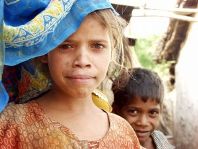
The World Bank Group’s private arm - the International Finance Corporation (IFC) - has refused to provide targeted remedy to children who were sexually abused in the IFC-financed Bridge International Academies project in Kenya. However several civil society groups including Gender Action have been holding the IFC to account. Read details in the following statements:
On March 8 International Women’s Day 2024, Gender Action, Accountability Counsel and Inclusive Development International issued this joint statement demanding that the World Bank Group’s International Finance Corporation must consult with and provide compensation to child sexual abuse survivors of the IFC-financed Bridge International Academies project in Kenya to remedy their long-term harm as much as possible. Despite repeated requests, the IFC has refused to consult with and denied psychosocial, financial and other compensation to the survivors. Read the back story about the egregious IFC Bridge project harms to the abused children here.
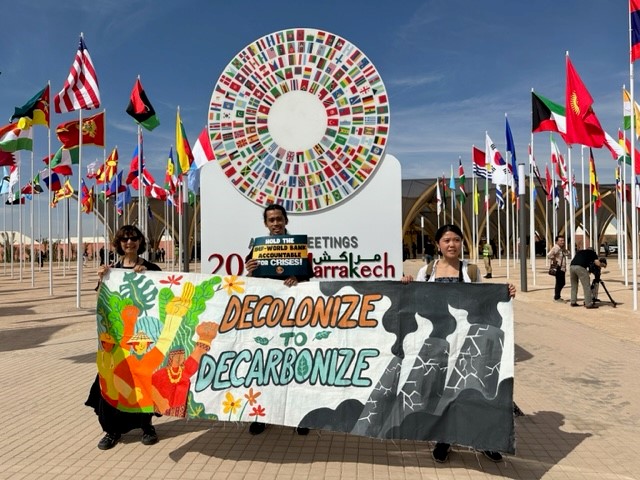
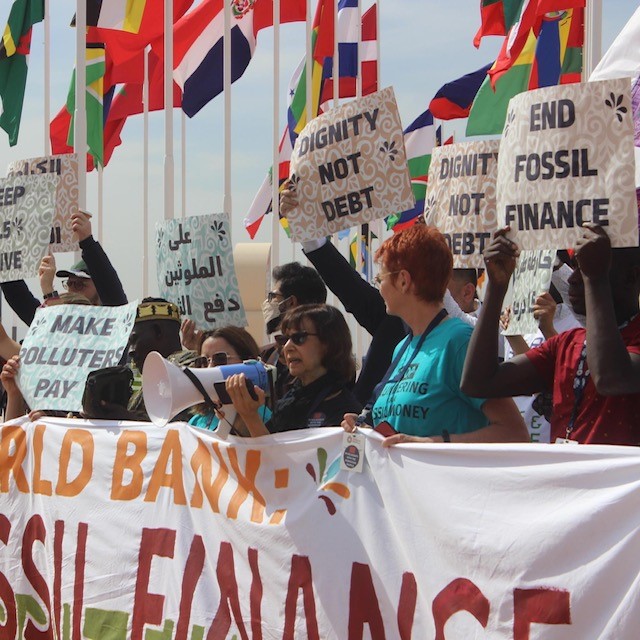
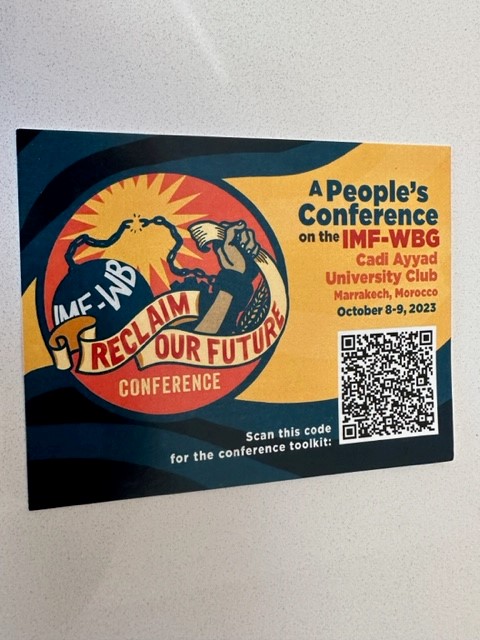
Together with partner organizations Gender Action organized more outside and inside events than ever around these two Bretton Woods Institutions (BWIs) annual meetings holding them accountable by calling on them to promote gender equality; protect biodiversity; end fossil fuel finance; terminate austerity measures - including shrinking and privatizing public services; stop requiring regressive taxes; and cancel debilitating debt. See a full list of our Marrakech activities on the Events page.
As a new Bank President takes command in mid-2023 while the Bank is not about to close its doors, Gender Action and allies have been demanding a first-ever merit-based selection process. Our blog explains why a heterodox feminist President is needed.
How much do IFI policies’ uphold gender and climate rights and justice? Find answers in the report, which assesses, scores and ranks the strength, adequacy or weakness of over a dozen International Financial Institution (IFI) gender policies and the gender sensitivity of their Environmental and Social Frameworks (ESFs) by applying Gender Action’s ecofeminist climate change and other indicators. While strong implemented gender-sensitive IFI policies are prerequisites for investments that do not harm men, women, and sexual and gender minorities (SGMs), they cannot have beneficial impacts within the longtime IFI paradigm that promotes austerity and privatization of public services - from infrastructure, to energy, water and social services and provides loans that contribute to low and middle income countries’ soaring debt.
Check out our infographic accompanying the report!
Both the report and infographic are co-sponsored by Gender Action, Friends of the Earth and Urgewald
Protest Actions Around the World Bank-IMF October 2022 Annual Meetings
Hundreds of citizens from around the globe protested climate harms resulting from Bank-Fund loans outside their joint fall 2022 annual meetings:
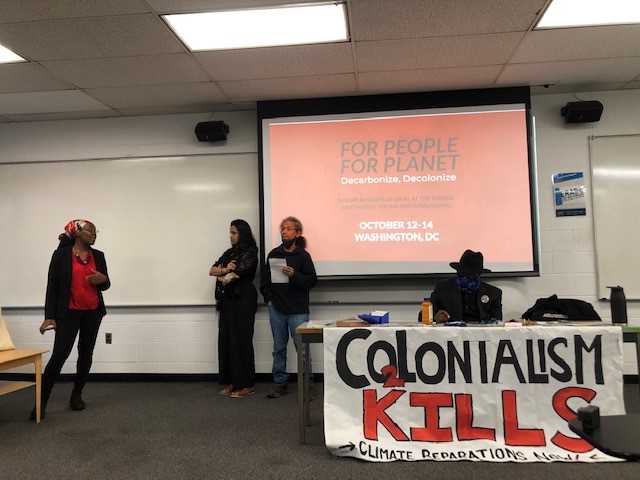
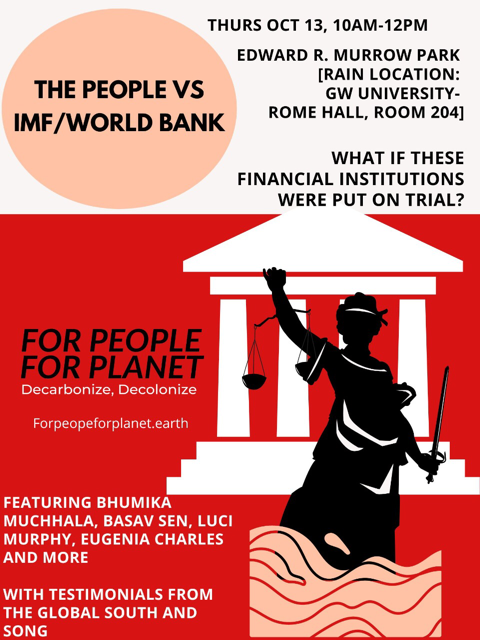
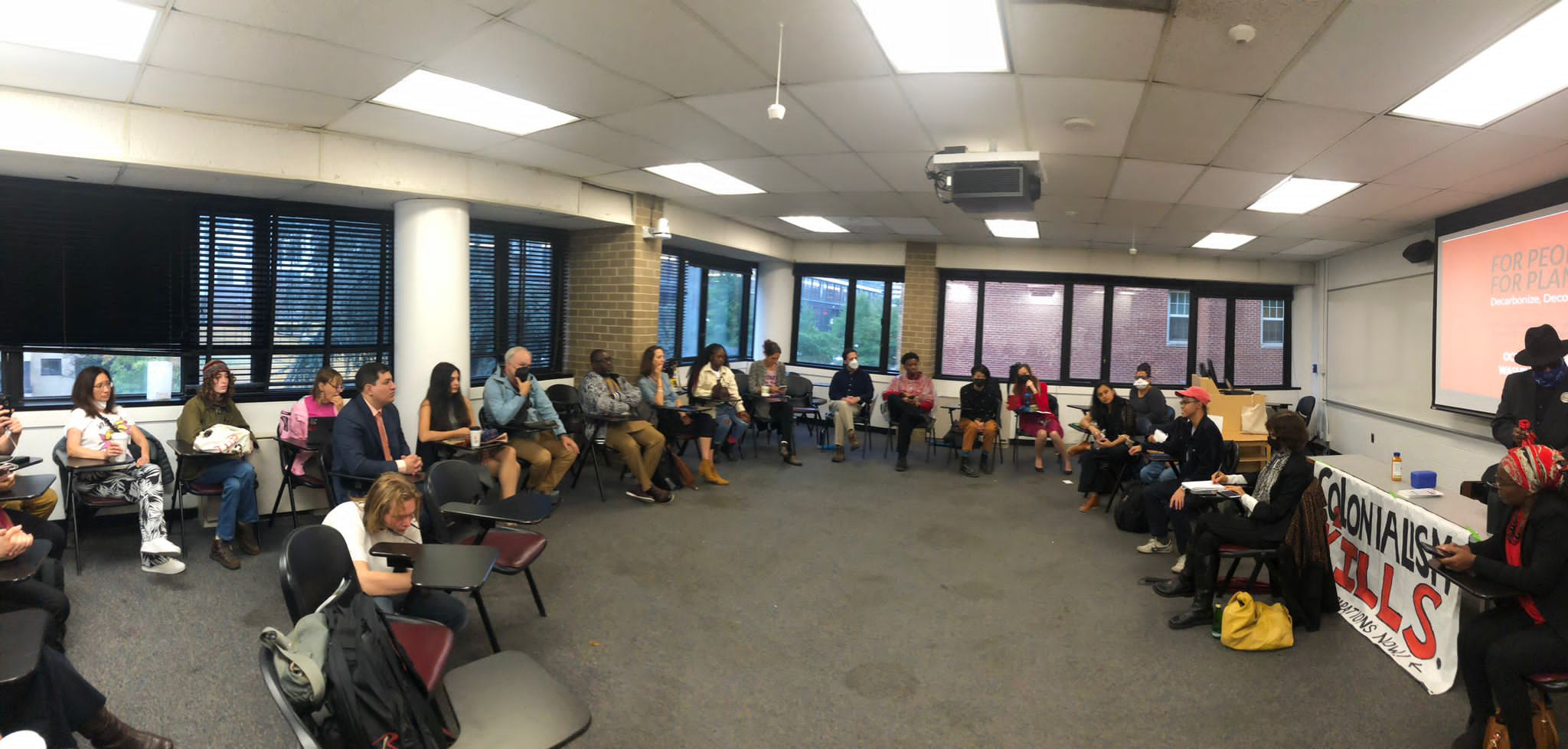
Peoples’ Trial against the IMF and World Bank
A first-ever Peoples’ Trial against the IMF and World Bank was co-organized by Gender Action and ForPeopleforPlanet during the October 2022 Bank-Fund annual meetings. Testimony highlighted decades of Bank-Fund privatization and austerity policies’ harm to borrower country citizens’ livelihoods and economies. Testifiers included: Andres Arauz, Ecuador’s former Central Bank General Director; Eugenia Charles, Haiti WPFW Konbit Lakay program host and author, Let Haiti Live: Unjust US Policies Towards its Oldest Neighbor; and Rodolfo Lahoy, Phillipines’ IBON International Policy, Communications, and Training Head. Judges Bhumika Muchala, Third World Network, and Basav Sen, Institute for Policy Studies, declared the Bank and Fund guilty of systematically undermining people’s freedom, access to basic needs and the global climate. Political activist singer Luci Murphy led audience singing about human rights.
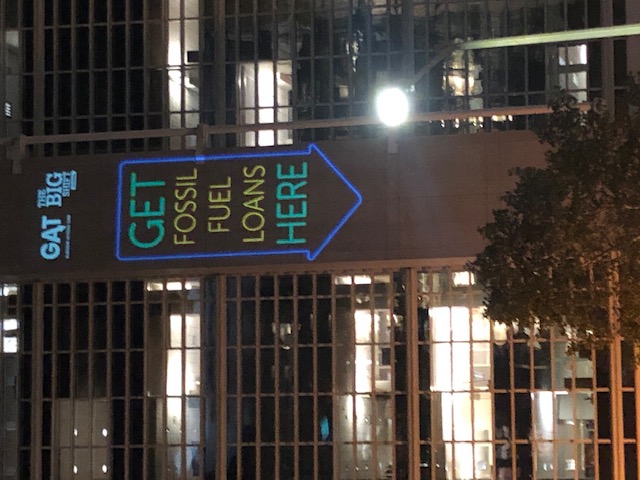
The Big Shift Global coalition published, Investing in Climate Disaster: World Bank Group Investments in Fossil Fuels, during the 2022 Bank-Fund annual meetings. Gender Action co-wrote the South Africa World Bank financed Medupi coal plant case study showing the project’s long-term havoc wreaked on women, girls and communities’ lives and planetary damage. Leading US environmental newspaper Grist reported on the BSG report citing Gender Action.
Investing in Climate Disaster: World Bank Group Investments in Fossil Fuels report citing Gender Action
AIIB Barely Addresses Sustainable Development Goals (SDGs)
A Gender Action analysis of key AIIB policies demonstrates that they barely address the climate, energy and gender SDGs which the AIIB committed to uphold.
AIIB Must Update its Policies!
Earth Day 2022!
6 steps the IMF and its shareholders should take to stop enabling fossil fuel expansion around the world and support countries’ green transitions
Since the IMF admitted that climate change, gender and other inequalities are macro-critical, its policy advice and loan conditions -- for example pushing countries to finance fossil fuel-boosting subsidies, squeezing other public spending, and increasing regressive taxes -- have undermined achievements in each of these spheres. This Earth Day 2022 briefing advises the Fund how to do better.
Joint Civil Society Position on IMF Gender Strategy
Feminist civil society groups issued this statement criticizing the IMF’s concept note outlining its first-ever gender strategy. We are holding our breath to see how many of our recommendations the Fund takes into account in its actual gender strategy.
World Bank
Civil Society Calls For 6 Interventions by the World Bank on LGBTQI+ Inclusion
About a decade ago Gender Action and a few other civil society groups launched a campaign to get the World Bank to promote LGBTQI+ inclusion rather than exclusion. Since then the World Bank launched a Sexual Orientation and Gender Identity (SOGI) Task Force, hired a senior SOGI advisor and began research in a handful of countries on the economic benefits of LGBTQI+ inclusion. However World Bank investments have hardly promoted this inclusiveness. This briefing pushes Bank investments to deliver benefits to the LGBTQI+ community.
International Women’s Day (IWD) 2022
The Asian Infrastructure Investment Bank (AIIB), in contrast to most other development banks, has not yet developed a specific gender policy or strategy to ensure its projects promote gender equality. Since the AIIB committed to contribute to achieving the global Sustainable Development Goals (SDGs), IWD provides a great opportunity to assess the extent to which the AIIB is meeting SDG 5 that focuses on attaining gender equality and empowering all women and girls. Two of several SDG5 subgoals include first, ending all forms of discrimination against all women and girls everywhere; and second, recognizing and valuing unpaid care and domestic work through the provision of public services, infrastructure and social protection and promotion of shared responsibility within the household. Our briefing, AIIB, Women and SDG5, demonstrates that the AIIB has a long way to go to uphold SDG5. The AIIB must adopt a gender policy and implement a series of recommendations that AIIB, Women and SDG5 presents.
Gender Action hosted a webinar for civil society groups who demand accountability and justice from IFIs, particularly related to ending harmful climate impacts, that can be strengthened by integrating an intersectional gender lens. We used the AIIB as our advocacy example on holding IFIs accountable on combined gender and climate impacts. See panelists Bhumika Muchhala, Eliza McCullough and Mariama Williams illuminate why and how to do so.
Green Climate Fund
More than an add-on? Evaluating the integration of gender in Green Climate Fund projects and programs, is a new study by Gender Action and the Heinrich Böll Stiftung Washington DC. More than an add-on? analyzes the extent to which the GCF, the largest global multilateral climate fund, considers gender impacts of its funding portfolio. Although GCF mandated gender integration from its outset, the study found GCF often fails to identify potentially harmful impacts on the most marginalized, disproportionately impacted gender groups -- women and lesbian, gay, bisexual, transgender and queer or questioning (LGBTQ) people. We recommend that GCF and climate finance at large must stop treating gender considerations as ‘add-ons’ and demonstrate how to do so.
Also see our underlying detailed Pattern Analysis Table and 30 individual project analyses.
Campaign for Climate and Gender Justice at Publicly-funded Development Banks
Pushing for Climate and Gender Justice at the World Bank Group
During the World Bank’s fall 2021 annual meeting Gender Action joined 77 civil society organizations in sending a letter to the to the World Bank Group Governors and Board spotlighting that management failed to respond to repeated calls to end support for harmful fossil fuels which contribute mightily to climate change.
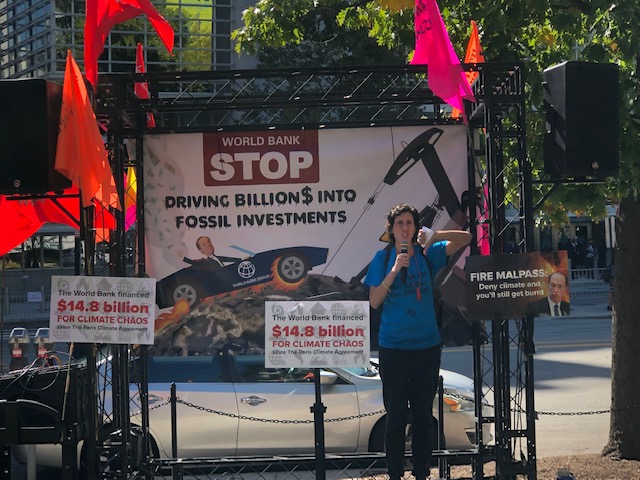
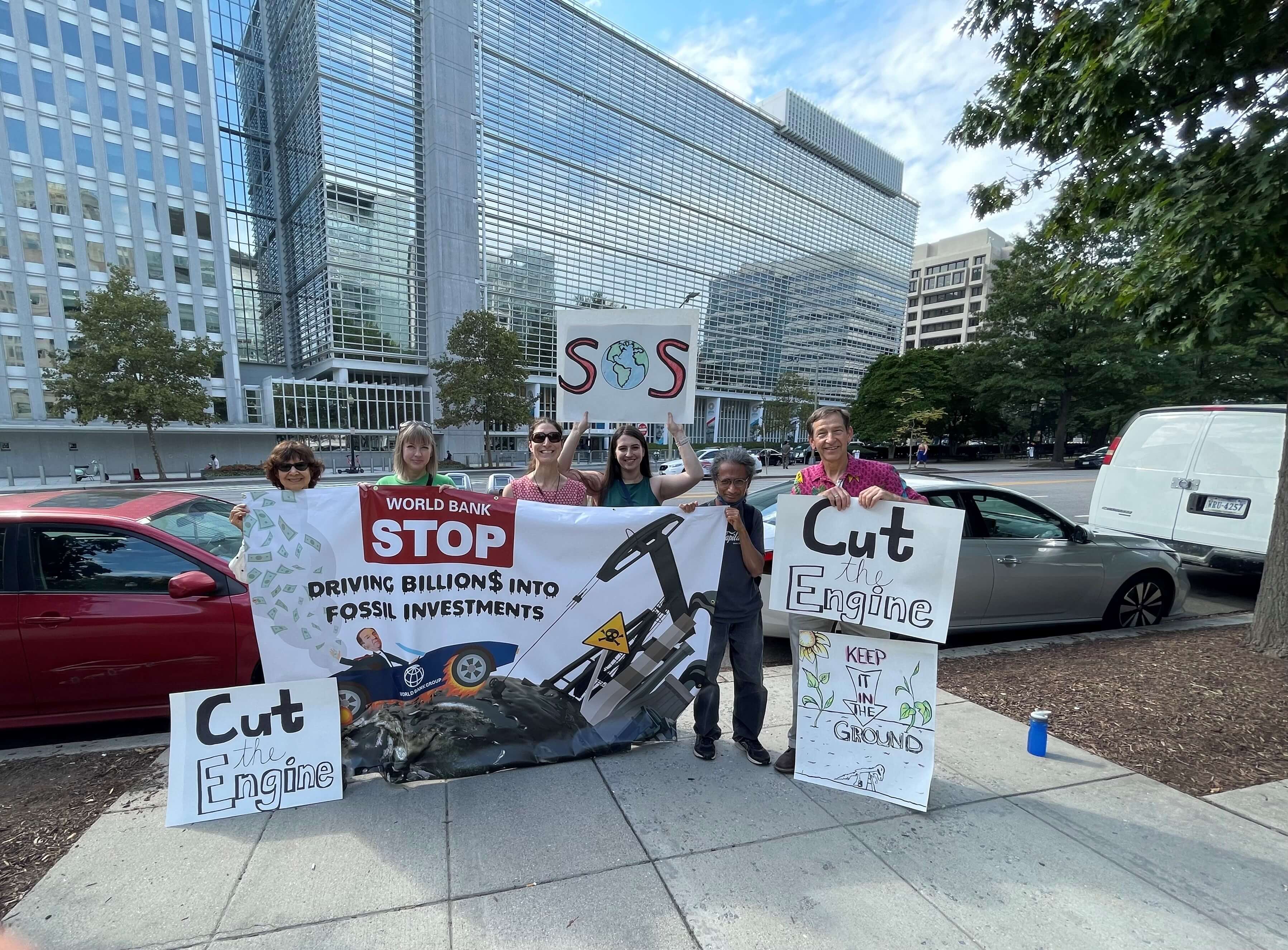
Gender Action also co-organized an action in front of the World Bank demanding that the Bank exit fossil fuel investments:
Pushing for Climate and Gender Justice at the Asian Infrastructure Investment Bank (AIIB)
During the AIIB’s fall 2021 annual meeting, Gender Action composed and sent a sign-on letter to the AIIB President calling on the Bank to approve and implement a freestanding mandatory robust gender policy that would prevent harmful investment impacts on all genders, especially women and LGBTQ people; apply a gender-lens to all climate assessments; and obtain free, prior and informed consent (FPIC) or refusal from all project-affected people before financing projects.
The letter argues that women suffer especially harmful project impacts because they work in agriculture and with natural resources as their primary sources of livelihood and in unpaid care work, and they play a primary role providing household food, water and fuel. LGBTQ people suffer especially harmful impacts because their marginalized position in society makes them more likely to be poor, lack housing, and experience food insecurity and violence.
See the sign-on letter to the AIIB containing 46 signatures.
A new Gender Action/NGO Forum on ADB/Oxfam/Recourse report and infographic, "Unmet Gender Promises: making IFI projects and policies deliver on gender-equal rights" demonstrate how publicly-funded development banks are failing on gender. The report and infographic analyze and score about a dozen International Financial Institutions’ (IFIs)’ gender policies and the gender-sensitivity of their Environmental and Social Frameworks (ESFs) and examine nine case studies. They conclude that few ESF-required project risk analyses incorporate gender discrimination; half of IFI gender policies and no ESFs require projects to collect gender-disaggregated baseline and subsequent data, undermining IFI capacity to ensure gender equality between women, men and sexual and gender minorities (SGMs); and most IFI gender policies and ESFs fail to address women’s primary roles managing and protecting the environment, natural resources and biodiverse ecosystems although climate change especially undermines women’s livelihoods and health. Recommendations promoting robust implemented policies underline they will only be effective if IFIs increase rather than decrease public spending and reverse decades of privatization of services and infrastructure which makes them unaffordable to poor women, men and SGMs during and after the COVID19 pandemic.
Call to End Covid19-Debt: Grants & Debt Cancellation to Achieve Gender Justice
The world’s largest development banks (also known as International Financial Institutions or IFIs) are providing low- and middle-income countries massive covid19 response funding, mostly through loans, with a fraction in grants. During covid19, IFIs have agreed to postpone loan debt repayment. Historically, loan debt postponement has never erased but only deepened borrower countries’ debt burden. Debt servicing triggers public social service budget cuts, disproportionately borne by women who compose the majority of workers providing health, elder and child care, and domestic work, where their contributions are already undervalued. Postponement of IFI covid loan debt payment will increase countries’ debt and reduce social services.
More debt does not shrink but expands gender- and income-inequalities.
Gender Action is campaigning to end IFI debt. While IFI covid19 loans target funding health and social systems, their debt burdens will ironically diminish health and other social spending because debt inevitably locks countries into a debt trap: they have to borrow more money to service growing debt burdens at the expense of human wellbeing. This vicious debt cycle exacerbates poverty. For example, due to the covid19 crisis India’s economy is shrinking at an annual rate of 45 percent and extreme poverty and hunger is accelerating in 2020 (The Economist May 23, 2020). Yet four IFIs alone rapidly disbursed USD 4 billion in “covid recovery” loans (not grants) to India in early 2020 (the Asian Development Bank – USD 1.5 B; the Asian Infrastructure Investment Bank USD 0.5 B; the New Development Bank – USD 1 B; and the World Bank – USD 1 B). Repaying these loans will exacerbate not alleviate poverty.
Gender Action calls for IFI grants and IFI debt cancelation, not new IFI loans and debt repayment postponement. Countries cannot afford to take on more debt.
Women Stand their Ground against BIG Coal is Gender Action’s newest field-based case study, which we co-sponsored with two African partners – Senegal-based Lumière Synergie pour le Développement (LSD) and the WoMin African Alliance. Women Stand their Ground highlights the deleterious impacts of the public African Development Bank (AfDB)-financed Sendou coal plant on people, particularly women, and ecosystems, amidst the world’s intensifying climate emergency. Women fishers in Bargny, Senegal, are leading a fight against the coal plant also co-funded by the public West African Development Bank (BOAD) and Netherlands Development Bank (FMO) and private Compagnie Bancaire de l'Afrique de l'Ouest (CBAO). The coal plant has destroyed women fishers’ livelihoods and undermined the health of community members. Although the AfDB announced in late 2019 it would exit new coal projects, Sendou, which began operating in 2018, will generate coal-fired power and pollutants harmful to people’s health for decades. Women Stand their Ground employs a groundbreaking ecofeminist impact assessment framework which underlines how the climate crisis particularly impacts African women who carry primary responsibility, based on the current gender division of labour, for putting food on tables and caring for people and ecosystems.
To persuade the Asian Infrastructure Investment Bank (AIIB) to strengthen its weak Environmental and Social Framework (ESF) guiding all investments, Gender Action, the Bank Information Centre Europe and the NGO Forum on the ADB sent recommendations to AIIB management demanding that the new AIIB ESF create and implement a strong gender policy and address the gender dimensions of climate change, resettlement and livelihoods. Read about them in Do No Harm: Recommendations for the Review of the AIIB Environmental and Social Framework.
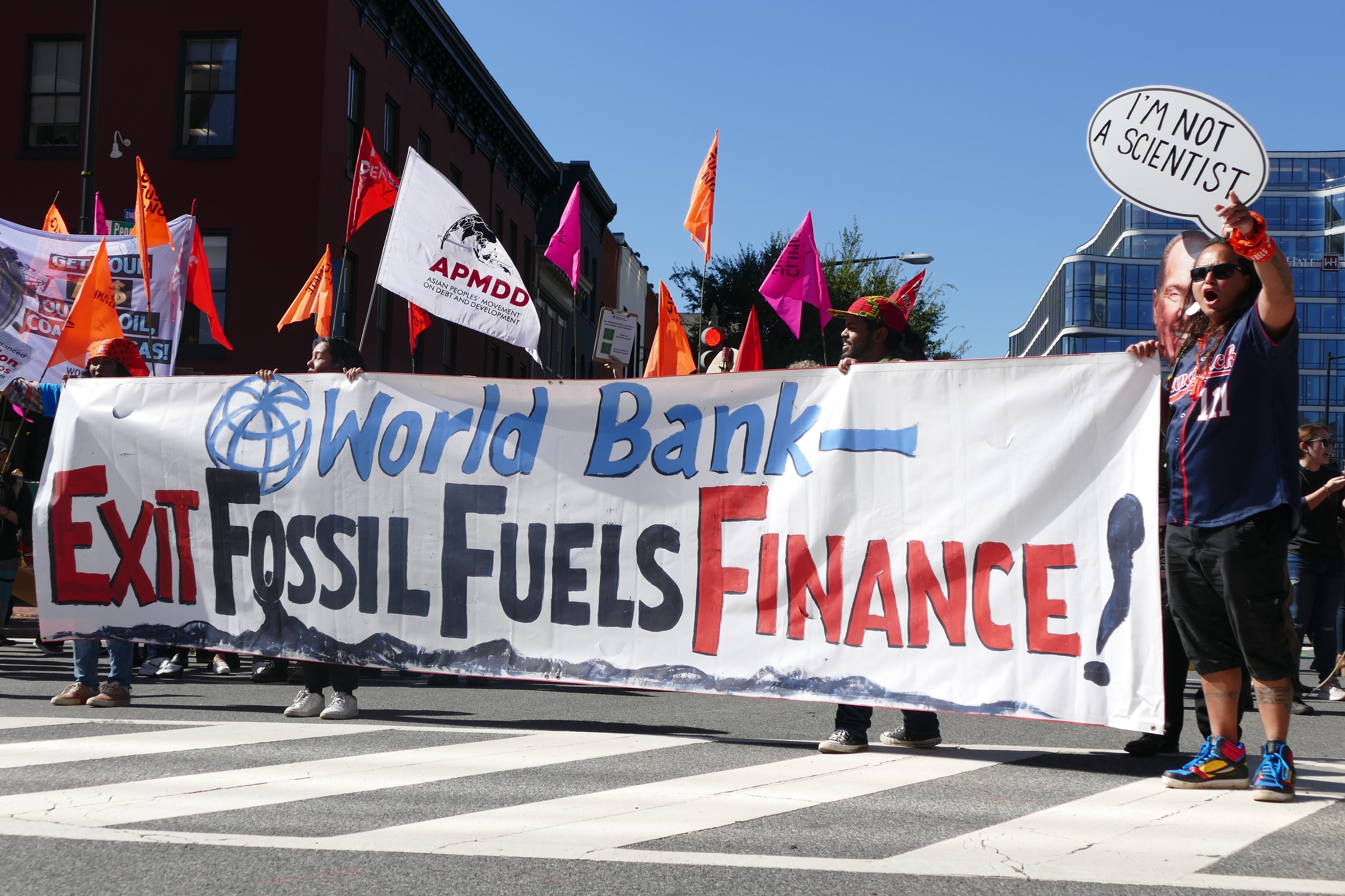
Protest: World Bank Out of Fossil Fuels!
To demonstrate against the World Bank Group’s (WBG’s) October 2019 75th annual meeting, Gender Action co-led a protest and a march outside the WBG calling on it to stop financing fossil fuel projects. We based our World Bank Out of Fossil Fuels theme on solid research demonstrating that the WBG continues to finance coal, oil and gas projects despite promises to exit coal by 2013 and upstream oil and gas by 2019. Our protest demanded that the Bank stop financing all climate-change-inducing fossil fuel projects now!
Gender Action co-crafted and delivered a letter to Bank President David Malpass from 110 citizen organizations demanding that the World Bank Group get Out of Fossil Fuels!
Since the China-headquartered Asia Infrastructure Investment Bank and New Development Bank began approving and disbursing loans in 2016, they have yet to adopt gender policies, which are essential although insufficient prerequisites for gender-sensitive projects that benefit and do not harm men, women and sexual minorities. To pressure these new IFIs to adopt robust mandatory gender policies, we present traditional IFI gender policies’ good and weak features. See our analysis in Gender Policy Tips for Newer IFIs: Lessons from Traditional IFIs
When Gender Action compared its moderate gender score of the AIIB-financed Gujarat Rural Roads Project documents to fieldwork findings, the project’s gender score fell dramatically. See the findings and underlying analysis in Roadblocks: Unmet Gender Promises in AIIB’s Gujarat Rural Roads Project
This new Guide to Women’s Rights and Environmental Justice Advocacy on International Financial Institutions is a joint Gender Action, Global Alliance for Green and Gender Action (GAGGA), and Both ENDS publication. The Guide is a tool for women’s rights and other groups’ advocacy on the IFIs to ensure IFIs uphold and do not undermine rights to clean water, food and a healthy and safe environment.
Gender Action’s newest report on Haiti, Gender Justice Scorecard: IFIs in Haiti, covering investments from 2013-17, represents our first analysis of how much Inter-American Development Bank (IDB)and World Bank projects integrate sexual minorities/LGBTQ+ issues. Every project in our random sample is analyzed and scored according to ten indicators including the extent to which the banks’ address sexual minorities/LGBTQ+ issues. Our analysis concluded that projects mostly fail to: (1) Provide measures to prevent Sexual and Gender-Based Violence (SGBV); (2) Create gender equal access to and gender-disaggregated data for project consultations and benefits; (3) Approach gender from a human rights perspective; and (4) Avoid forced resettlement in some cases, causing loss of homes and livelihoods and price increases for basic services such as education, electricity, and water, which will disproportionately harm women and sexual minorities. The Scorecard ends with a series of recommendations to address these and other issues.
Our Gender Scorecard and Analysis of AIIB Projects: A Documentary Review, finds of the first 24 AIIB approved projects, the majority, 15 (62.5%) of projects ranked weakly for gender sensitivity. Only 3 out of the 24 (12.5 %) ranked strongly and 6 (25%) moderately for gender sensitivity. The analysis is based strictly of documentary analysis. However, on-the-ground case studies reveal documentary gender promises are not being met during implementation. This feedback indicates that a greater proportion of projects than this scorecard suggests could actually have harmful gender impacts.
Sexual Assaults in the World Bank
Elaine Zuckerman wrote a letter to the World Bank Ombudsman in December 2017 describing her experiences being sexually assaulted by two male World Bank officials in the early 1980s. Like other women who did not feel safe coming forward in the past during the #MeToo era of reckoning and accountability she spoke up about previous sexual assaults by a supervisor and a colleague. Her letter closed with the thought, “Now is the ideal moment to examine, spotlight and redress past and present sexual violations in the Bank so that all staff have the safe workplace they deserve!” Read Elaine’s letter to the World Bank Ombudsman here.
AIIB and NDB
Gender Action has been leading advocacy on the gender impacts of the world’s newest rapidly-growing development banks: the New Development Bank (NDB) and Asia Infrastructure Investment Bank (AIIB) that launched in early 2016. Their establishment reflects a power shift in the international system from the developed industrialized world towards emerging market economies.
The NDB, created by the BRICS countries (Brazil, Russia, India, China and South Africa), contains 43% of the world’s population, and includes three of the world’s largest economies measured by GDP -- China (2nd), India (7th) and Brazil (9th). While its initial loans are to BRICS countries the NDB plans to lend to other developing countries. The AIIB, which is edging toward 100 member countries, lends to countries across Asia and other regions. Both development banks loans support infrastructure projects, especially energy in the NDB’s case.
Gender Action advocacy on the NDB and AIIB is pushing them to initially: (1) Create and implement strong mandatory gender policies (2) Train all staff to routinely implement gender policies in all operations (3) Hire senior gender experts to lead these processes.
Gender Action advocacy on the NDB is conducted through BRICS Feminist Watch (BFW), an alliance formed in 2016 to collectively promote gender-inclusive development in NDB policies and operations. BFW provides Gender Action with a strong platform to conduct advocacy. In 2017 and 2018 Gender Action joined other BFW members in meetings with the NDB President and other managers in Shanghai to advocate our above agenda. Gender Action has also attended meetings at the AIIB every year since 2016.
Late in 2018 the World Bank began implementing its new Environmental and Social Framework (ESF). The ESF weakens the Bank’s current environmental and social safeguards. Gender, women, men, girls, and boys are almost invisible in the ESF despite Gender Action campaigning to make gender a priority of the new ESF standards. Together with partner organizations Gender Action submitted detailed suggestions on how the Bank’s new voluntary ESF Guidance Notes for borrower countries should address gender issues.
Gender Action’s campaign media strategy is exemplified in this Guardian article: "Why don't World Bank projects safeguard women's rights?"
A companion ESF presidential directive contains non-discrimination requirements which support LGBTI aspirations.
Recently, Gender Action conducted a long overdue Gender Analysis of the IFC’s 2012 Performance Standards on Environmental and Social Sustainability which remain current. The IFC, the private sector financing arm of the World Bank Group, is playing an increasingly prominent role in Group operations. The IFC boasts that its Performance Standards set the benchmark for other IFIs including on gender-sensitivity. But Gender Action’s analysis found that the Performance Standards hardly address women’s rights and gender justice issues.
Haiti: Mining
In this article Elaine Zuckerman explores harmful gender and environmental issues that likely mining activity in Haiti would generate. Women, who primarily steward Haiti’s land, forests, water and eco-systems that sustain their households could lose access to natural resources and livelihoods and suffer sexual violence triggered by potential mining. The Haiti Advocacy Working Group, which Gender Action co-founded and whose Gender and Human Rights Task Force is chaired by Elaine Zuckerman, published the article.
Haiti:
Gender Action participated in the 2017 Haiti Advocacy Working Group (HAWG) climate change delegation to Haiti that investigated Hurricane Matthew’s devastation of Haiti’s breadbasket in the South. HAWG follow-up advocacy led the Global Environmental Facility and other donors to grant $26 million to help rebuild productive agriculture following Hurricane Matthew’s destruction.
Gender Action and CEE-Hope Nigeria profile Bank project evictee Bimbo Oshobe, a mother of four whose life was upturned when a Bank-financed project bulldozed her slum several years ago. Residents were evicted without consultation, warning or compensation, and left homeless in crowded, dangerous Lagos. Years later the “urban renewal” project has not delivered its promise to upgrade the slum. Bimbo has slept outdoors and in makeshift shelters since the project flattened her home and soda-drink business, her source of livelihood. Other evictees became utterly destitute: A few died from malnutrition. Some women and girls have been raped and others turned to sex work to survive. Bimbo’s homelessness transformed her into an activist. Read her story here: World Bank Project Evictee Becomes Women’s Rights Activist - Bimbo Oshobe .
Gender Action provides a
vital and user friendly toolkit for civil society groups to incorporate gender perspectives into their work on the IFIs or any other projects. All sections contain electronic hyperlinks to a vast array of available gender resources. Click on an underlined word to be directed to the specific tool you need!
Gender Toolkit for International Finance Watchers in English.
« Boîte à outils sur le genre pour observateurs des Institutions Financières Internationales » est désormais disponible en français.
Herramientas de Género para Observadores Financieros Internacionales también està disponible en Español.
Gender Action is often asked: Which International Financial Institution (IFI) has the strongest gender policy and/or strategy?
To answer this question, this paper compares and ranks IFI gender policies and/or strategies based on IFIs' published information.