|
Gender Action is the global gender IFI watcher advocacy leader holding IFIs accountable for the gender impacts of their investments.
Whether indirectly advocating gender inclusion to the IFIs through Gender Action's widely cited publications (see
Publications page), building the capacity of country stakeholders through training events and consultative meetings (see
Country Focus page), directly engaging the World Bank and other IFIs through public forums (see
Events page), and expanding the networks of partners pressuring the IFIs to be more accountable on meeting their gender promises, Gender Action is contributing to engendering IFI policy and investments.
However, the IFIs increasing gender focus occurs within a “neoliberal” framework that promotes privatizing public services and infrastructure worldwide. This approach, which reduces poor people's access to health, education, nutrition and other human rights adds to women's unpaid care burdens, and undermines attainment of the IFIs' gender and poverty-reduction objectives.
"Working with Gender Action... has been enriching, inspiring and even exhilarating. Gender Action is one of the few gender-focused organizations still around today whose works and words reverberate in the 'high places' (World Bank, IMF, etc.) telling them about injustices they perpetrate directly or otherwise, in the remotest regions of the world, and get these wrongs righted several times. What other cause can be more impactful than bringing relief to several thousands of people - men, women, children, in far away regions? Gender Action has worked over the years to ensure environmental, human and health rights for some of the most oppressed and discriminated people from Asia to the most remote communities in Africa, ensuing gender equity, speaking up for silenced women. Their gender-specific work has been monumental."
- Betty Abah, Friends of the Earth Nigeria
Gender Action: Holding International Financial Institutions to Account: Ten Critical Achievements in Ten Years (2002-2012)
Examples of our achievements include:
A Global Movement
Gender Action's campaign holding the International Financial Institutions, the world's largest development banks, accountable for ending harmful gender impacts of their investments and ensuring they benefit women, men, girls, boys and sexual minorities, is becoming a global movement! Human rights, women's rights and sexual minority rights groups from all corners of the globe are approaching and coordinating with Gender Action to attain our goals.
Stopping World Bank Fossil Fuel Investments
At the 2023 World Bank annual meeting in Marrakech, Gender Action demanded and got the World Bank’s draft 2024-30 Gender Strategy to remove language promoting women’s positive roles as fossil fuel and extractive corporate board members. The draft stated, “Thirty percent or more of women on corporate boards has a positive correlation with climate governance and innovation in utilities, oil and gas, and mining sectors”! This statement contradicted the World Bank commitment to adhere to the 2015 Paris Agreement goal of ending fossil fuel and mining/extractive investments that generate climate change. The draft gender strategy language reflects how siloed Bank entities fail to communicate and share a unified vision.
World Bank Sexual Orientation and Gender Identity (SOGI) Task Force
As a result of Gender Action campaigning over several years with LGBTI and transgender partners worldwide to end discrimination experienced in World Bank investments, the Bank created a SOGI Task Force. The Task Force oversees hiring Bank LGBT experts who are leading data collection and other research to end LBBTI exclusion and discrimination in Bank investments.
IFI Accountability Mechanisms
Inter-American Development Bank Independent Investigation and Consultation Mechanism (MICI): Haiti Case
In 2013 Gender Action assessed the impacts of the IDB-funded Caracol Industrial Park (PIC) especially on women who compose the majority of PIC's mostly apparel assembly workforce. We presented our results in
Caracol Industrial Park: Social and Gender Impacts of Year One of Haiti's Newest IFI-funded Industrial Park.
By 2017 the IDB invested US$ 240 million supporting PIC's infrastructure for private enterprises. But as Gender Action demonstrated the IDB failed to consult the community on its needs. Gender Action's work sparked community households whose land was grabbed to build the PIC to file a complaint with MICI in 2017. The complaint in under consideration.
World Bank: Inspection Panel
For years Gender Action has requested that the World Bank's Independent Inspection Panel add gender discrimination to the issues it addresses in responding to complaints voiced by people who feel harmed by World Bank investments.
In 2014 and 2015, the Panel took its first steps toward following Gender Action advice: In 2014, the Panel recommended that the Bank's India Vishnugad-Pipalkoti Hydroelectric Project ensure women's safety around labor camps and forests, and that women compose one third of project staff. The Panel Chair highlighted that this gender-sensitive response was directly in response to Gender Action advocacy.
In 2015, in response to civil society exposure that male workers' sexually abused and assaulted girls in the Bank-financed Uganda Transport Sector Development Project (UTSDP), impregnating and ruining the lives of almost a dozen girls, the Panel inspection caused the Bank to cancel the project.
In 2016, the Bank also responded to UTSDP by creating a Gender-Based Violence Task Force that will recommend on how Bank projects can prevent sexual assaults. This is a significant step since GBV pervades Bank infrastructure projects.
International Monetary Fund and Gender
Our 2014 analysis, the IMF & Gender: a long way to go, critiqued IMF gender research that promotes employing women to stimulate economic growth without complementarily upholding women's and men's equal rights. Since then the IMF's first feminist Managing Director, Christine Lagarde, has been combining the moral imperative of women's and men's equal rights with the economic argument of women contributing to growth, as Gender Action urged. Lagarde called on men who claim they are feminists to behave like feminists! Let's celebrate this initial progress while recognizing that many IMF loan requirements continue to harm lives of poor people, especially women, through public spending cutbacks and tax regimes which increase women's unpaid burden.
World Bank: Women's/Human Rights
For over a decade, Gender Action has pushed the World Bank to advance women's and men's equal human rights, as the Bank had unilaterally promoted women's empowerment as an instrument to achieve economic development. Gender Action believes that both an economic development and a women's/human rights rationale are needed. Gender Action and the Bretton Woods Project co-hosted a year long online civil society forum which provided feedback of the draft World Bank World Development Report on Gender Equality and Development, especially promoting women's human rights.
The Bank's 2012 flagship World Development Report on Gender Equality and Development upholds women's rights as a "core objective in itself."
Gender Action suggested to the new World Bank Gender Unit director, Jeni Klugman, to use a rights-based approach to gender issues in World Bank investments.
The World Bank hosted a special event on the Convention to End all forms of Discrimination against Women (CEDAW) and women’s rights in honor of International Women’s Day, 2012
Inter-American Development Bank: Women's/Human Rights
Gender Action made human rights a key objective during 2009-2010 civil society consultations on the IDB's new gender policy and pushed for strong evaluation measures.
The IDB's new 2011 Operational Policy on Gender Equality in Development promotes women's/human rights and includes specific indicators to ensure the policy's effective implementation and evaluation.
World Bank: Agriculture and Food Security
Since Haiti's devastating earthquake in 2010, the World Bank approved almost a half billion dollars in new investments for Haiti, which Gender Action tracks and analyzes. Recent Gender Action publications have exposed missed opportunities in Bank Haiti agriculture projects to support gender equality and female farmers.
In December 2011, the World Bank approved a new gender-sensitive project, "Relaunching Agriculture: Strengthening Agriculture Public Services II," which promises sex-disaggregated data and quotas for women's participation.
World Bank: Gender-Based Violence (GBV)
Since one in three women around the world is sexually assaulted in her lifetime, and many infrastructure investments create situations where women are subject to sexual abuse and rape, Gender Action tracked how many World Bank projects have been dedicated to combatting gender-based violence (GBV). In 2010 we found that only three Bank projects in history had been dedicated to reducing GBV. Gender Action campaigned to change that.
The Bank reacted to Gender Action's critique by prioritizing ending GBV. As of 2015, the Bank had financed a dozen projects devoted to combatting GBV, with more in the pipeline.
Gender Action's relentless prodding the World Bank to improve its track record on Gender-Based Violence has moved the needle!
Gender Action research exposed that the Bank financed only three projects aimed at combatting GBV from 1947-2011. And Gender Action's and partners' field-based reports demonstrate that workers constructing Bank infrastructure investments such as oil and gas pipelines, highways and urban development projects sexually harass and violate females sometimes impregnating young girls.
In response to Gender Action advocacy, the Bank has financed over a dozen projects aimed at combatting GBV; promotes ending GBV in its 2015 gender strategy; and committed to establishing a Task Force to fight GBV in 2016.
IFIs and Debt
Through advocacy with the Jubilee Debt Network and Gender Action's own letter to President Obama, Gender Action persistently fought for IFIs to cancel impoverished Haiti's substantial IFI debt in order to free up funding for health, education and other basic needs.
In an unprecedented move, the Inter-American Development Bank (IDB), International Monetary Fund and World Bank cancelled all past Haitian debt by mid-2010; the IDB and World Bank also committed to make only grants for Haiti going forward.
IFIs and Haiti Civil Society Advocacy
Following Haiti's 2010 earthquake Gender Action co-founded the Haiti Advocacy Working Group (HAWG) comprised of over 30 social justice, faith-based and human rights groups. Gender Action introduced and has continuously has led HAWG advocacy on the IFIs.
Other HAWG groups that previously had not worked on holding IFIs accountable now vigorously do so on issues ranging from housing and land to mining, deepening our advocacy effectiveness.
World Bank: Reproductive Health and HIV/AIDS
After the World Bank dropped reproductive health from its "Population, Health and Nutrition Strategy" draft in 2007, Gender Action helped coordinate civil society advocacy calling for its reinstatement.
Gender Action's advocacy leadership pressured key World Bank Executive Directors to reject the draft and restore the World Bank's commitment to reproductive health.
World Bank: Reproductive Health and HIV/AIDS
In 2007, Gender Action published "Mapping Multilateral Development Banks' Spending on Reproductive Health and HIV/AIDS," the first report to examine IFIs commitments to promote reproductive health and prevent and treat HIV. The report revealed that reproductive health and HIV constituted a tiny fraction of IFI spending between 2003 and 2006, and that most projects failed to address critical gender issues, such as gender inequality, sexual violence, and men's role in promoting maternal health.
While IFIs still spend a tiny fraction of their budgets on reproductive health and HIV, the World Bank has improved its approach to these issues by: 1) strengthening its Gender Action Plan focus on reproductive health; 2) approving a strong Reproductive Health Action Plan (2010-2015), which address gender inequality and women's human rights; and 3) including HIV and gender-based violence as priority areas in its 2012 World Development Report on Gender Equality.
IFIs: Gender and Extractive Industries
Gender Action analyzed World Bank and other development bank-financed pipelines' gender impacts in West African, Central Asian and Eurasian countries. We found that life for women was worse, not better, after the projects were completed. The pipelines eliminated women's farming and fishing livelihoods, employed males in pipeline construction and drove women into prostitution out of desperation. All this increased women's dependence on men, sexually-transmitted infections, trafficking in women, violence against women, and stillbirths - often caused by toxic pollution from inevitable pipeline leaks.
In response to Gender Action's advocacy:
First, the World Bank created and staffed a gender and extractive industries unit and webpage and its independent Inspection Panel indicated that it would be willing to consider a first-ever gender discrimination case; the European Bank for Reconstruction and Development launched its first Gender Action Plan; and the Inter-American Development Bank instituted Gender Safeguards (see "IDB Gender Safeguards").
Second, our work in Africa inspired women's organizations across the continent to launch a gender and ecological justice movement to guarantee safe environments for African women who produce food, steward natural resources, and care for families and communities.
World Bank: Climate Finance
Shortly after the World Bank published its multilateral Climate Investment Fund (CIF) framework, Gender Action's 2009 report, "Doubling the Damage," critiqued the CIF's lack of gender sensitivity.
CIF members in 2010 adopted their first Strategic Environment, Social and Gender Assessment to provide IFIs and recipient member countries with a framework for managing the social and gender impacts of CIF activities.
Inter-American Development Bank (IDB): Gender Safeguards
Gender Action's 2006 "Boom Time Blues" (see "World Bank: Gender and Mining") influenced IDB's gender experts to try to prevent harmful impacts on women that IFIs often cause.
IDB's Gender Equality Policy is the first IFI gender policy to include safeguards to prevent Boom Time Blues-like harms and "identify and address adverse impacts on gender equality" (IDB website).
World Bank: China and Water
Gender Action's 2003 report, "Reforming the World Bank: Will the New Gender Strategy Make a Difference? A Study with China Case Examples," exposed how World Bank infrastructure projects like water neglected gender considerations.
In response, the World Bank began to systematically include women in the design of water supply projects in China.
IFI Advocacy: Linking IFI Watchers and Gender Justice Groups
Gender Action has shared gender analysis skills in capacity-building workshops and other technical assistance such as our Gender Toolkit for International Finance-Watchers to numerous global and southern partner IFI-watcher groups.
Groups that traditionally critiqued IFIs for environmental and other accountability issues but lacked a gender focus have now added gender dimensions to their IFI advocacy, powerfully multiplying Gender Action's own IFI-watching. These partners include the Bank Information Center (BIC), the Bretton Woods Project, Jamaa Resources Institute in Kenya, Martin Luther King Jr. Foundation (LUKMEF) in Cameroon, National Association for Women's Action in Development (NAWAD) in Uganda, and Friends of the Earth member groups in Nigeria, Cameroon, Ghana and Togo.
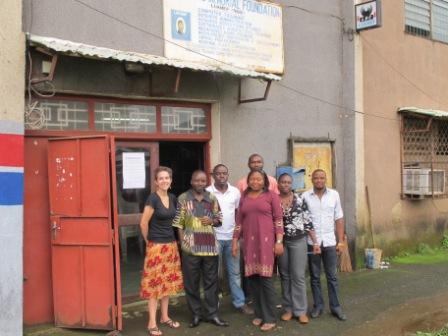 "Our project [with Gender Action] is proving far more important, informative, empowering than we originally thought it was going to be a simple data collection and analysis. It is now revealing a lot of information and community participative tools to us than we thought. No such in-country and intensive site visits and research has been done outside the government's own commissioned evaluations. I definitely think that whoever would want to help Africa should invest his money to keep governments and these funders open and transparent." - LUKMEF Executive Director, Christian Tanyi
|